
How to make AI characters and places once, and reuse them in every shot
By Deep Bhalerao, founder · Published
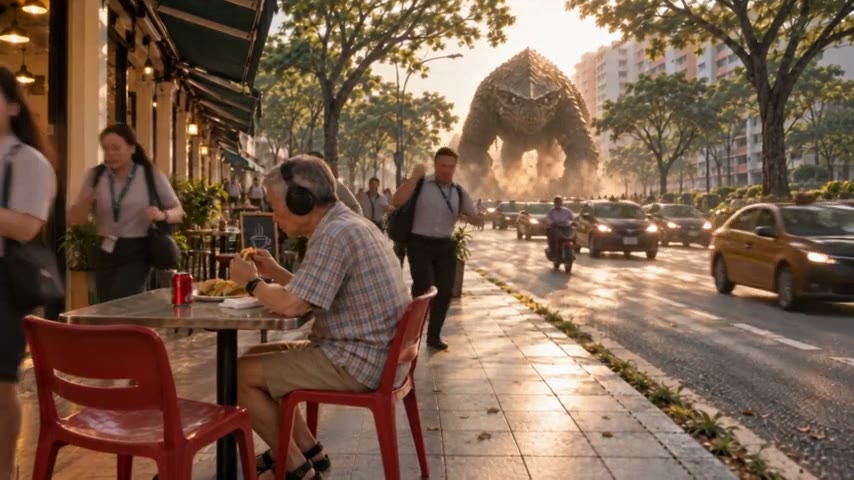
An AI film is only as steady as its pictures. Every clip is rendered from scratch, so if the video model has to imagine your hero again each time, it will imagine someone slightly different each time. The fix is simple to say: make each character and each place once, check it, and attach that same picture to every clip they are in.
This is how I make them for OVERCLOCK, my photoreal kaiju series made in Agent Social, and the mistakes that shaped the method.
Who and what needs a picture
The rule is about repetition. Anyone who has to look the same twice, which means anyone in two or more clips, gets a picture. Every place a clip happens in gets a picture. The studio makes these on its own when the story needs them, even if you asked for words only, and tells you in one line why.
Everyone else is described in the clip's words. In Episode 1, the boy on the jetty, his father, the fishermen and the helicopter crew all stayed as descriptions. They appear once, so a picture would be wasted effort.
Making a character
You can start from a description or from your own photos. I play the lead, so for Deep the studio used real photos of me from the front, both sides and the back. Nothing about him was ever redrawn.
For everyone else, the studio paints a character sheet: one wide picture of the same person four times, full body from head to toe, from the front, both sides and the back, on a plain light-grey backdrop with soft, even light. Nothing in the hands, no text, a neutral face. Alongside it goes a face close-up. The plainness is on purpose. The sheet is there to say who someone is, not to set a scene.
- Write the look in plain, physical words: age, build, skin, hair, eyes, and exactly what they wear. "A faded blue cotton shirt with the sleeves rolled up" beats "casual clothes".
- Give every character a written voice: age, tone and accent. Otto is gravelly, gentle and unhurried. That line keeps him sounding like Otto in every clip.
- For a creature, show its size. The Glowback's sheet has an ordinary man standing at its feet, reaching only its ankle, so the model always knows how big it is.
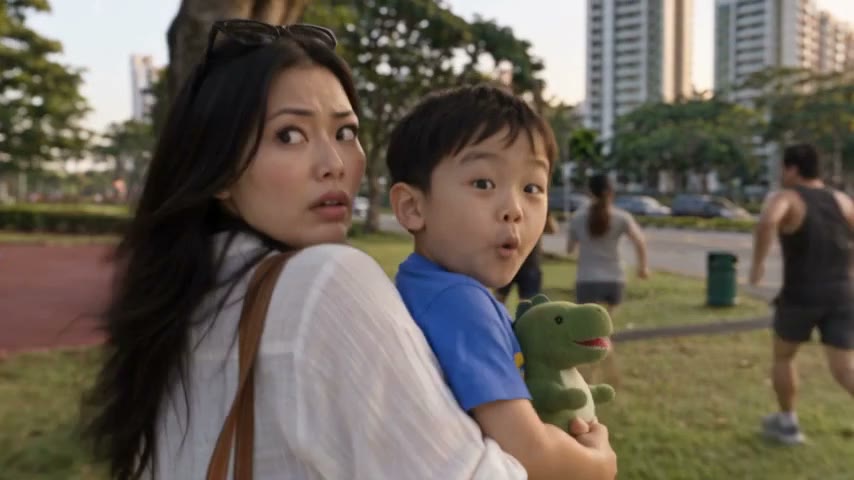
New outfits change only the clothes
Characters change clothes, so a character can have several looks. The way a look is made matters. It used to be redrawn from the face close-up alone, and every picture came back with a slightly different face, a new pose and a new camera angle.
Now a look is made by editing each of the character's own pictures in place and changing only the clothes. The face, hair, body, pose, framing and background stay exactly as they were. A look is the same photograph with different clothes on, which is all it ever should have been.
Making a place
A place starts as one picture of it, empty: no people, no readable words. Describe only what is really there, and be concrete. Nora's Café is a semi-open courtyard under a roof of translucent panels, with a big leafy tree growing up through the middle, long dark wooden tables, a slate counter and rain drumming overhead. A model can build that.
Be careful with words that describe anything beyond the picture. An early standing description for places mentioned example entrances like a doorway off the street. That text went out for every place, including a sealed tomb, and the model duly built a street. Everything you write about a place, the model will try to draw.
For the main places, you can ask the studio to film a full turn on the spot. You then pick the frames you need, one for each direction a camera will face, so the café looks like the same café from the door and from the counter. A deformed frame can be removed from the place's pictures, and the removal can be undone.
Vehicles are places
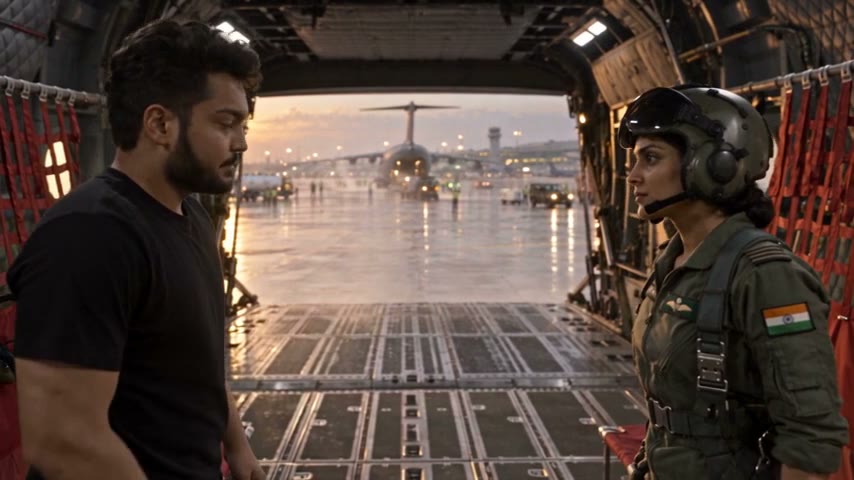
A car, a bus, a boat, a helicopter or a cargo plane is a place, never a prop. People sit in it, stand in it and get filmed inside it, so it needs the same care as a room. Splitting a vehicle into an outside prop and an inside room gives you two pictures that never quite match.
Write the details a viewer would catch. Deep's SUV is an automatic with the steering wheel on the right, as in India, and that is written into its description so no shot puts him on the wrong side.
When the place is real, use real photos
Some places in OVERCLOCK exist. Where I had good photos of a real place, they could be used as the place's pictures as they are, or cleaned up, with people and text taken out. A photo is the thing itself; a redraw is a guess at it.
When a place should feel real but no single photo fits, photos can still guide it. Episode 4's boulevard in Marine Parade was invented for the episode, inspired by a set of attached photos of glass towers, a wide divided road and a white heritage shophouse, and never copied from any of them.
Then reuse, every time
Once the cast and places exist, a clip simply attaches the pictures it needs and names each person by their tag. A place picture goes along for reference. Because it shows the place empty, the clip says what is different now. In Episode 3 the army operations room picture is empty, and the take says that in this clip every seat is taken.
By Episode 4, my episode plan opens with two short lists: what to reuse exactly as it is, and what to make new. Deep, Nora, Otto, the creature, the officers and the helicopter were all reuse. Only the new places and new people were made new.
The method on one card
- Give a picture to anyone in two or more clips and to every place a clip happens in.
- Make each character from your photos or a plain four-view sheet, with a written look and voice.
- Show a creature next to a person so its size is never in doubt.
- Make new outfits by changing only the clothes on the existing pictures.
- Make each place one empty picture, described only by what is really there.
- Treat every vehicle as a place.
- Use real photos for real places, and photos as a guide for invented ones.
- Check every picture before it is used, then reuse it in every clip.
Related: Consistent characters in AI video — same faces every shot
Make your own film in Agent Social
Sign up