
How to write a screenplay for AI video that the model films well
By Deep Bhalerao, founder · Published
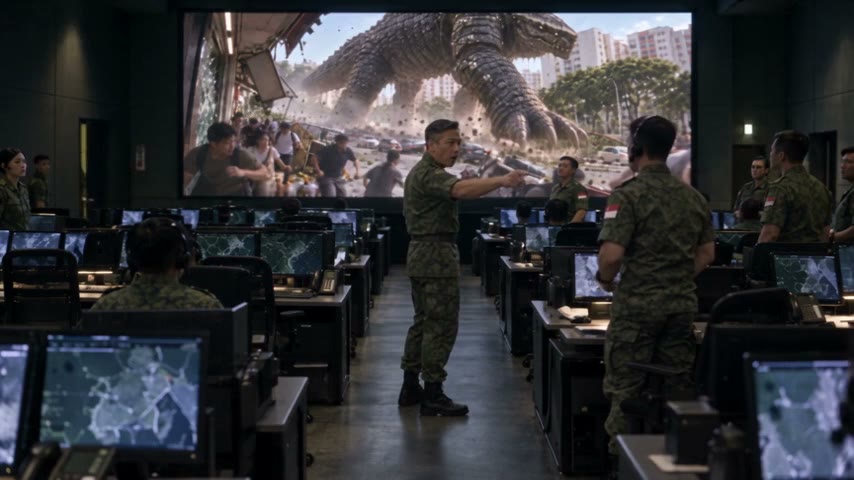
Every clip in an AI film starts as words. In Agent Social we call that text a take: the screenplay for one clip, which the video model reads from top to bottom and then films. The pictures of the cast and places go with it, but the take decides what happens.
I learned to write takes the slow way, on my series OVERCLOCK. The screenplays of Episode 3 went through about 350 corrections before they were right. This is what those corrections taught me.
Long rules make flat clips
My first instinct was control. Early takes were long documents that set every distance, every position and every thing that must never happen. The clips came back correct and lifeless. A one-line request, written the way a person would ask a friend, often came back more alive.
The answer was not to write less. The clip I now hold up as the example, Episode 3's chapter 7, is a 1,406-word screenplay with only 54 spoken words in it. The difference is where the words go. They describe the scene, the people and the world. They do not try to operate the camera or police the model.
One event, in real time
A take is one continuous event. Time runs on without skipping, and the clip never leaves its place. Inside that, the video model is free to cut the way a good feature film would: close on a face when someone speaks, wide on the creature, over to the crowd reacting. Every cut lands on the same moment in time.
When I want one unbroken shot, running beside Deep down a jetty, say, I ask for it in words. When I want an exact cut, I write it where it happens in the story. What I never write is seconds. The clip's length is set on the clip; the take only describes the event.
Open with the situation, in bold plain words
The first paragraph tells the model what world it is in and what is going on right now. Chapter 7 of Episode 3 opens in a Singapore army operations room on a quiet morning shift. It tells the model that minutes ago a creature as tall as a thirty-storey building walked out of the sea, and that nobody in this room knows yet. That one sentence sets every face in the clip.
Be direct. Say how the room should feel, what kind of people are in it and how they move. Telling it these are trained soldiers who stay at their posts gives the model far more to act with than a list of adjectives.
Put every person somewhere
A model left alone lines people up in a row, all doing the same thing. So every main character gets their own spot, posture and reason for being there, spread across the room and using what is really in it: one at the counter, one perched on a chair arm, one by the window.
In chapter 7, the lieutenant sits at a console in the front row. The colonel stands one seat away, at another operator's shoulder, the only person on his feet. When her phone rings, she turns in her chair and holds the receiver out to him. Nobody has to guess where anyone is.
The background matters too. A named, busy crowd reads as a real place: operators leaning into screens, someone reaching for a phone, a captain swivelling his chair. A frozen crowd reads as a painting.
Say who speaks, how, and keep the lines short
Each line is written the same way: the speaker's full name with their picture's tag, what their body is doing as they talk, then the words. In chapter 7 the colonel, giving one short nod and pointing two fingers at the big screen, says: "Put it on the screen." The gesture is as much a part of the line as the words.
Then budget the talking. People speak about two and a half words a second. A 30-second clip comfortably holds roughly 40 to 55 spoken words, and fewer when the action is big. Cram more in and the model rushes the lines and drops the pauses, glances and reactions that make a scene land. Directions can run as long as the scene needs. Spoken words cannot.
Someone heard on a phone or radio but not seen gets the same treatment, plus a clear note that we only hear them. In Episode 1 the fishing skipper's mayday comes over the helicopter's radio speaker, and the take says plainly that he is heard, never seen.
Write the camera as a shot, not a measurement
Most of the camera is best left to the model. When the camera does matter, write it the way a director talks: how close, how high, on whom. "Medium, at eye height, on the colonel as he takes the phone" is a shot anyone can picture.
I learned this from a film where every camera line was written as a position in metres from the walls. Only two of its eight clips said how big the subject should be in the frame. The shots came out carefully placed and dramatically empty, too far away and pointed at the architecture. The one clip that said "close on Tomas Venn's hands and the bronze lever" was the one that read as deliberate.
Put each sound where it happens
Sound belongs in the screenplay, at the moment it happens, not in a list at the end. The first take of OVERCLOCK ends its action with the rotors thudding, rain drumming on the fuselage, the radio crackling and the roar shaking the air, then one line for the music: a low, tense hum of strings. In chapter 7, the footage on the big screen plays loud through the room's speakers, cutting through the quiet.
Let the pictures do the describing
Every recurring character and place has a picture that goes with the take. Writing their looks out again in the screenplay only gives the model two versions to choose between. The take names each person with their tag and moves on.
A place picture is shown empty, so the take says what is different now. Chapter 7 tells the model to copy the room's layout from its picture, but that the picture shows it empty and in this clip it is never empty: every seat is filled, every screen is lit.

The checklist I read before saving a take
- Does the first paragraph say where we are, when, and what is going on?
- Is it one event in real time, in one place, with no seconds written anywhere?
- Does every main character have a spot, a posture and a reason?
- Is every line written as name, tag, body, then words, and do the spoken words fit the clip?
- Is the crowd named and busy, and is nobody frozen?
- Is each sound written where it happens?
- Have I left the faces, clothes and rooms to their pictures?
You do not have to write any of this yourself. In Agent Social the studio writes every take from your story, and you change it in plain words. But knowing what a good take looks like makes you a much better judge of one, and that is most of directing.
Related: AI movie maker — from one idea to a finished film
Make your own film in Agent Social
Sign up