
How to turn a story or script into a short film with AI
By Deep Bhalerao, founder · Published
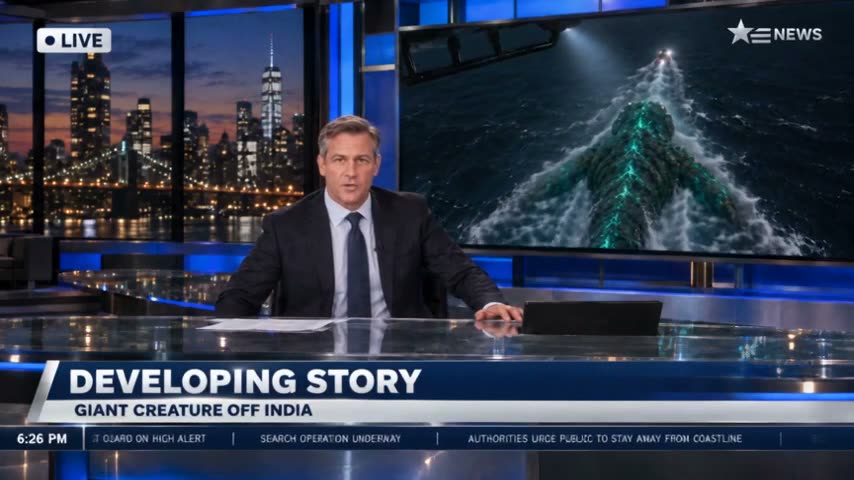
In Agent Social, you turn a story into a short film by handing it to the studio in a chat, one line or the whole thing. The studio plans it as chapters, writes a screenplay for every clip, makes the cast and places once, films the clips in order and adds voices, music and subtitles. You read each step, change anything in plain words, and download the finished film as an MP4.
That is how I made OVERCLOCK, my AI kaiju series, with no camera and no crew. This is the path from a page of story to a finished film, with the numbers from my own episodes and the places where it went wrong.
Do I need a finished script, or is an idea enough?
An idea is enough. One sentence will get you a whole first draft, and you change what you do not like by saying so. If you already have a story or a script, paste it in: the more of your story the studio has, the less it invents.
What helps most is not length but a short brief for the film. Mine for OVERCLOCK has five parts: what the show is about and who it follows, the look (extreme photorealism, like real footage from a big monster film), the frame (wide and horizontal), the world (present day, the monsoon, the west coast of India) and the people. It also carries the few rules that make the story what it is. Deep has no powers, ever.
How does a story become chapters and clips?
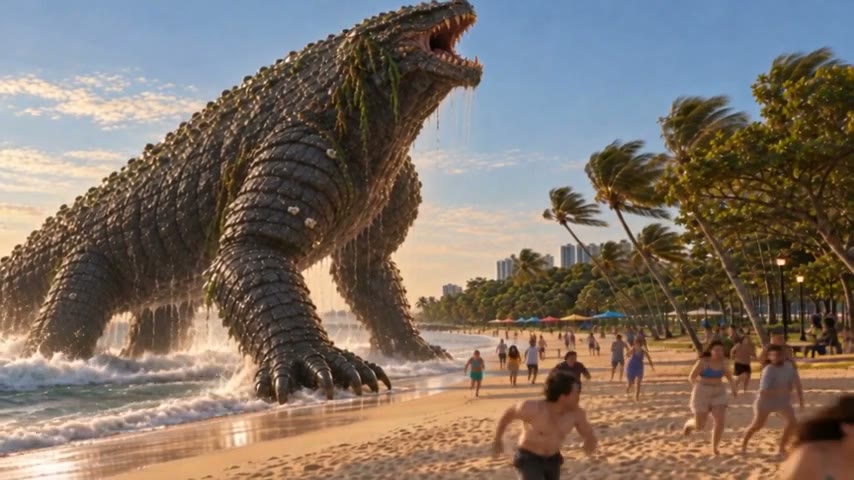
The studio plans the film as chapters. Each chapter gets a place, a time of day and one job: the single thing it must do for the story. In Episode 3, chapter 1’s job was to show the viewer the new creature first, through a small boy on a Singapore beach, before the hero even knew it existed.
Each chapter is filmed as one or more clips. A clip is a few seconds to half a minute of video: on Seedance 2.5, the default model, from 4 to 30 seconds, with up to 10 shots cut inside it. Episode 3 has twelve chapters and fourteen clips; most chapters are a single clip, and two needed a second one. The shape bends to the story.
Who writes the screenplay for each clip?
The studio does, and you read it before anything is filmed. A clip’s screenplay, which we call a take, is the text the video model reads and films: who is where, what they do, what they say and what we hear. Asking for a change here costs nothing. Asking for it after a render costs a retake.
Read each one as if you were going to act it. Is this how the character talks? Does one clip try to hold too much? Ask for changes in plain words: "make this shorter", "she should laugh before she answers", "everyone looks at the colonel when he speaks". The studio rewrites the clip and shows it to you again.
How do the characters stay the same from scene to scene?
Every recurring character and every place gets a picture before filming starts, and every clip they appear in uses that same picture. For myself I used my own photos; the rest of the cast, down to the kaiju, were painted by the studio from written descriptions. Someone who appears once, like a fisherman on a radio, is simply described in their clip.
How is the film rendered and fixed?
Clips render strictly in story order: chapter 1, clip 1 first, then the next. The studio will not run ahead. Watch each one as it lands. If a clip comes out wrong, you redo that one clip, and everything else stays as it was. In my experience the fix is nearly always a missing sentence in the take, such as who is looking at whom, or where someone goes when they leave the frame.
What about voices, music and subtitles?
The voices come out of the clip with the picture: each character has a voice you set once, and the video model speaks their lines in it, lips moving with the words. Background sound is written into each take, so it is made with the clip too. Composed music is made only when you ask, ideally once every clip is final. Subtitles are written from the finished film and timed to the spoken words.
How long can the film be?
As long as the story needs. The clips are joined into one film, so length comes from the number of chapters, not from a limit on a single generation. OVERCLOCK’s Episode 1 runs about four and a half minutes, and Episode 3 close to six.
What does it cost?
It is not free. It is pay as you go: finished film runs about $5 a minute, paid from credits you top up when you need them, with no subscription. Retakes, higher resolutions, voices and music add to it, which is one more reason to read every take before you render it.
The whole path on one card
- Paste your story, or one line, plus a short brief: what it is, how it looks, where it is set, who is in it.
- Read the chapter plan: each chapter should have one job.
- Check every character and place picture before the first render.
- Read each take; keep the talk within the clip’s time.
- Render in order, watch each clip, redo only what is wrong.
- Add music last, then subtitles, and download the film.
None of this asks you to know how a camera works. It asks you to know your story. The studio films it; your job is to keep it honest from the first chapter to the last.
Related: AI movie maker — from one idea to a finished film
Make your own film in Agent Social
Sign up