
To film an AI action scene you can follow, make the place readable, ask for one continuous movement per clip, and keep the same faces and vehicles in every shot. Agent Social films each clip in order, so you check every beat as it comes back. The proof here is OVERCLOCK’s soldiers, armoured cars and helicopters.
What makes an AI action scene easy to follow?
An action scene is easy to follow when the viewer always knows where they are, who is on which side, and which way everyone is going. In Agent Social, you get that by deciding the geography before you film: a hangar with a door at one end, a road with the creature at the far end, a gate the vehicles drive through. Each place gets its own pictures, so the hangar looks like the same hangar in every shot. Then you describe who goes where in plain words, such as soldiers running toward the open door. The studio films the clips in story order. For more on keeping people consistent, see consistent characters and the guide to keeping the same face in every AI shot.
Why should each clip hold one continuous movement?
Because fast action breaks when a clip tries to do too many things, and holds when it follows one movement from start to end. A clip in Agent Social runs from 4 to 30 seconds, long enough for a full action: a convoy leaving a hangar, a soldier running to a vehicle, a rocket fired and the blast that follows. OVERCLOCK’s rocket blast in Episode 5 is one unbroken 30-second shot, and the jaws coming out of the smoke were a single 30-second take, used whole. Describe the movement once, from the first step to the last, rather than listing five different things to happen. If the next thing is a different movement, make it the next clip. Short clips of one movement each also make the cuts feel like a real action film.
Everything in one clip
- Run, jump, shoot, crash and escape in a single request
- The place changes halfway through
- The viewer loses track of who is chasing whom
- A retake redoes all of it
One movement per clip
- The run is one clip, the crash is the next
- The place stays the same inside each clip
- Each cut answers one question
- A retake redoes only the clip that missed
How do you keep the same faces through fast motion?
You keep faces steady by making each character once, checking their pictures from every side, and letting every clip use those same pictures. Speed is when a face drifts, so the checking happens before filming: open each character, look at the face, the clothes and anything they always wear, and ask for changes in plain words. Then read each clip’s cast list before it is filmed. Every person who appears should be there, in the right outfit, and an extra who appears once can simply be described. Check every action clip when it comes back, and if a face is wrong, ask again for that clip only. OVERCLOCK’s soldiers, Major Alex Ng, Lieutenant Rachel Ma and the rest of Alpha Team, keep their faces from one clip to the next in Episode 5.
How do you film vehicles and helicopters that stay the same?
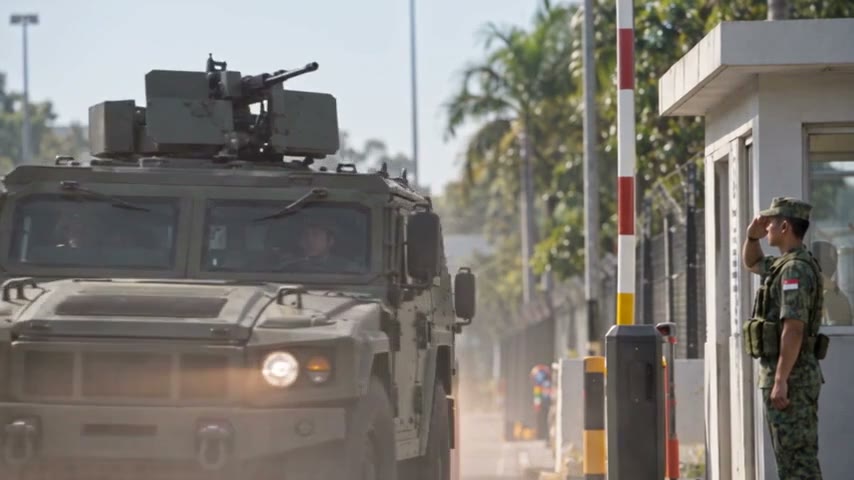
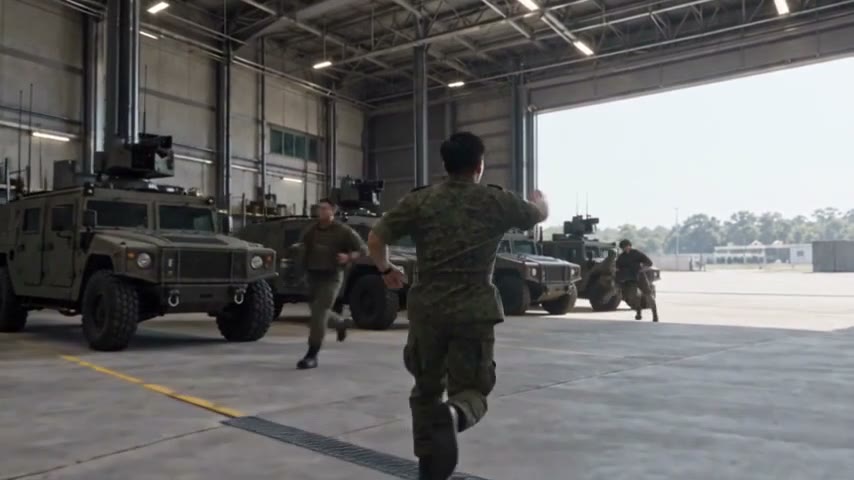
Give each vehicle its own pictures, the same way you give a character theirs, so it never changes between shots. In Agent Social, vehicles are places: an armoured car, a helicopter or a plane that people are filmed in or around has pictures from several sides, and every clip uses them. OVERCLOCK’s armoured cars look the same in the hangar, at the gate and on the road, and the Chinook helicopter that Episode 4 shows on the lawn is the one Episode 3 ended on. Episode 4 opens on the exact last frame of Episode 3, with the rotors still turning, and Deep gets on while Nora and Otto watch it go. See Episode 4, Double Scoop for the full sequence.
How do you preview an action beat before you pay to film it?
Ask for a moment: a still picture of the beat, made from your approved characters and places before the clip is filmed. It shows who is where, which way they face and which room or road it is, like a rehearsal photo. Check that the soldiers are on the correct side, that the vehicle is the right one, and that nothing has wandered in. If something is wrong, ask in plain words, such as “move the gunner to the roof” or “take the van out of the road”, and a new still comes back. Fixing a still is one picture; fixing a filmed clip is a retake. Film in draft, the default, and upscale the finished film to 1080p once, so every fix costs as little as possible.
The hangar
The soldiers run to the vehicles toward the open door.
The gate
The lead vehicle drives through as a soldier salutes.
The split
The cars separate on the road, each going its own way.
The box
The cars take their places around the creature.
What action should you avoid in an AI film?
Avoid action that confuses the viewer or that you cannot check. Keep each clip to one clear movement, and give every person on screen a place and a job. Prefer vehicles, weapons fired at a creature, running and reactions, which read clearly at speed. Keep every person in danger an adult who can act, and never put a child in danger. Keep the weapons and violence tasteful: OVERCLOCK shows the army failing to stop the creature, never gore. When a clip misses, redo only that clip by asking for the detail that was missing, such as who is looking at whom. The rest of your film stays as it is, and a late fix to one clip never changes the others.
Is your action scene ready to film?
- Could a stranger say where the scene is and which way everyone is moving?
- Does each clip hold one movement from start to end?
- Have you checked each character’s pictures and each vehicle’s pictures?
- Have you previewed the key beat as a moment?
Answer each question for your verdict.