
To make an AI music video, film a short story in one continuous scene, join the clips, then ask Agent Social to compose an original song for it. Every clip already comes back with the sound of its place; the song is added last, once the picture is final, and you shape it by asking in plain words. No extra music app is needed.
What is an AI music video made of?
An AI music video is three layers: a story that is filmed, the sound of the places in it, and a song laid on top. In Agent Social the first two come together. Each clip is filmed with the picture and the sound of its place, so rain, traffic or a crowd is already there. The song is the third layer, made only when you ask, after the clips are joined into one film. A piece can carry several clips or the whole film, or be the song for a music video. So the order matters: picture first, song last. If you are new to the studio, how music, voices and subtitles get into an AI film shows every layer, and the AI video generator with sound page says what comes with every clip.
Describe one scene and one mood
Say where it happens, who is in it and what the song should feel like, in plain words.
Read the chapters
The studio writes the story as chapters. Change anything in plain words before a clip is filmed.
Film in order
Film the first clip, watch it, then the rest. A retake costs least in the draft.
Join the clips
Put the film together. Only now is the picture final, so only now is the song worth making.
Ask for the song
Describe the mood and where it should build or stop. An original piece is composed and placed on the chapters.
Shape it, then add subtitles
Ask for it louder or softer at an exact moment. Add subtitles and end credits last, on the final cut.
How do you write the story for a music video?
Write one continuous scene with one small change in it, so the song has a single feeling to follow. A music video does not need a plot, it needs a moment that turns: a girl waits at a bus stop in the rain, the bus is late, then a stranger shares his umbrella. Keep it to one place and one stretch of time, because cutting between days and locations makes the song fight the story. Describe the place and the people, say what changes, and let the studio write it as chapters you can read before filming. Clips run from 4 to 30 seconds and one clip can cut between several shots, so a three-minute video is only a handful of clips. Write the turn near the end and the song has something to build toward.
The late bus
One bus stop, one stranger and one umbrella. A soft song can build exactly when he steps under it.
“Make a music video in one continuous scene: a girl waits at a bus stop in the rain, the bus is late, and a stranger quietly shares his umbrella. Soft, hopeful mood. I will ask for the song once the film is joined.”
Last rickshaw home
A night ride through a sleeping city gives a steady rhythm to the picture and a calm place for the song to sit.
“Make a music video in one continuous scene: a tired rickshaw driver takes his last ride of the night through an empty Mumbai, passing shuttered shops. Warm, slow mood.”
Birthday on the terrace
Friends, lights and a cake make a happy scene that loud, bright music suits from the first frame.
“Make a music video in one continuous scene: friends surprise a girl on a rooftop terrace with a birthday cake and string lights at sunset. Bright, joyful mood.”
How do you make a song for it with text to music AI?
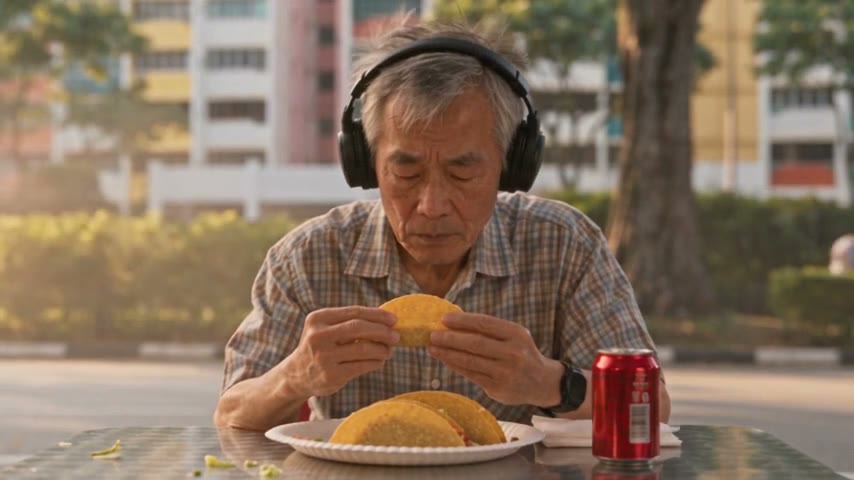
Ask the studio to compose music in plain words, and it writes an original piece and places it on the chapters where it belongs. In Agent Social that is the text-to-music step: you describe the mood, where it should build and where it should stop, and nothing else is needed. Music is made only when you ask, so you pay for it once, on the cut you are actually posting. Every piece is an original, never a real artist’s song or a copy of one. A piece can have lyrics: OVERCLOCK Episode 4 has a bubblegum-pop song written for one gag, and it plays in Uncle Tan’s headphones and stops dead the moment he pulls them off. Ask for the feeling you want, such as “warm, slow, hopeful, building when the stranger arrives”, and listen to what comes back.
When should you add the song to the video?
Add the song last, once every clip is final and the film is put together. Music made earlier may no longer fit when a clip is filmed again or a chapter changes length, and you would pay for it twice. In Agent Social the song is mixed in the next time the film is put together, so you ask for it, watch the whole film with it, and fix what you hear. Watch for every moment where it gets in the way of a line or arrives too late. Each of those is one sentence to the studio, not a new piece. A music video has little talking, so the song can run longer than it would in a drama, but the rule does not change: picture first, song last.
How do you shape the music to fit the picture?
Ask for the shape in plain words, at the exact moment you want it. The music dips under speech so the words stay clear, and if a moment needs it louder or softer you say so, for example “make the music quieter under the last line of chapter 3”. The shape that works best on OVERCLOCK is steady and low under a scene, building only across a stretch that is really serious, and stopping at a change of place or time. Say that in your first request, such as “low under the walking, building when he opens the umbrella, gone when the bus arrives”. If a piece is close but not right, change its volume before you ask for a new one, because a good piece at the wrong level is still a good piece.
7
composed pieces in OVERCLOCK Episode 4
30 seconds
the longest a single clip can run
4 seconds
the shortest a single clip can run
Should a music video be wide or tall, and where do you post it?
Make it tall if it is for phones and wide if it is for YouTube, and decide before you start. In Agent Social the studio picks the shape from your brief: wide 16:9 for a TV-style film, tall 9:16 for a phone-first short, and every film is posted in the shape it was made in, never cropped. When the film is done it downloads as an MP4, in its original size or in 1080p, and you can publish or schedule it from the studio to your connected channels. Everything waits as a draft until you press Publish. For a longer video, turning a film into shorts and posts shows how to cut one short post per chapter, each pointing back at the full video.
What does an AI music video cost?
You pay per finished minute of film, with no subscription: a one-minute music video is from $25, up to 1080p. Voices and the sound of the scene come with every clip, and every charge, including any music you ask for, is listed in your credit history. There is no free plan and no free trial, and credits you do not use never expire. The price follows the finished length, so a short song is easy to budget before you start. Judge the picture and the song in the draft, then upscale once to 1080p at the end. What an AI episode costs has the longer worked examples.