
Yes. As of November 2026, YouTube pays for AI-made videos that are original and carry your own creative voice, and refuses ones that are mass-produced, templated or repetitive. Our reading: YouTube asks whether each video is clearly yours and clearly new, whatever tool made it. An original series answers yes to both.
Does YouTube monetize AI-generated videos?
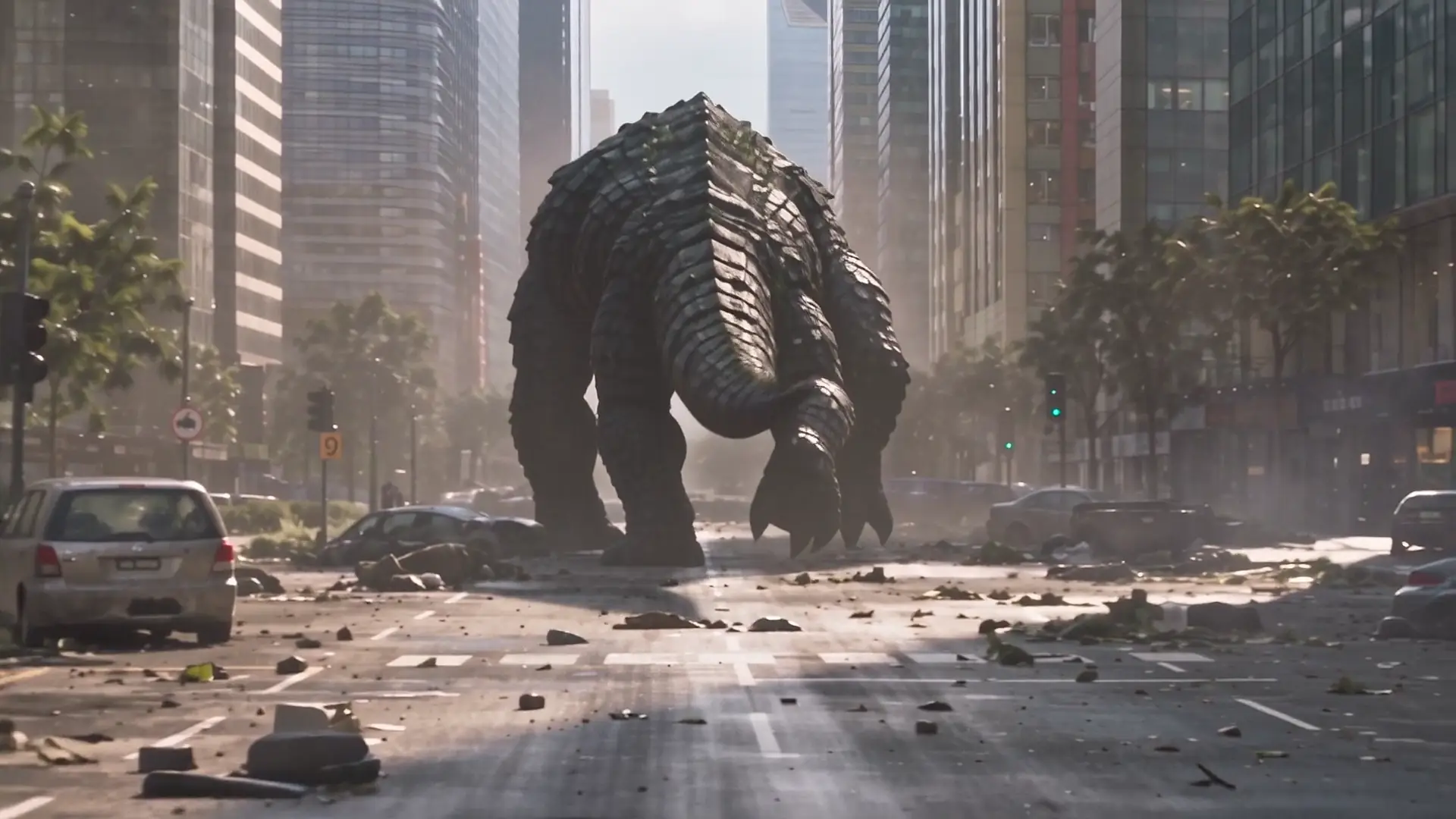
Yes, when they are your own original work and not mass-produced. As of November 2026, YouTube’s channel monetization policies give using AI to visualize a character and story you invented as an example of what can earn, along with using AI to edit scripts or make a unique background. What the policy refuses is “inauthentic content”: videos that are repetitive or mass-produced. YouTube renamed the rule from “repetitious content” on 15 July 2025 and said such videos were never allowed to earn. I made all five episodes of OVERCLOCK, a photoreal kaiju series, alone in Agent Social, with no camera and no crew, and each one is a new story with the same lead, Deep. Here is how I made OVERCLOCK.
What kind of AI videos will YouTube refuse to pay for?
YouTube refuses to pay for AI videos that look mass-produced, templated or repetitive. Its channel monetization policies, as of November 2026, name the patterns: content that looks made from a template; image slideshows, templated storylines or scrolling text with little or no story; highly similar storylines across many videos; unrelated AI clips stitched together to shock; and AI content built on generic templates. AI personas posing as human experts on health, money, legal or political topics cannot earn either. YouTube also says that if it cannot clearly tell you made the content, monetization may be removed from your entire channel. That makes near-identical AI clips the riskiest channel to build, and a series with one cast and a new story every episode the safest.
Refused: inauthentic content
- Slideshows or scrolling text with little story
- One storyline retold across many videos
- Unrelated AI clips stitched together to shock
- AI personas posing as experts on health, money, law or politics
Can earn: your own creative work
- A character and story you invented
- Your own scripts, edited with AI help
- A new story every episode
- Work YouTube can clearly tell you made
What does an AI channel need to join the YouTube Partner Program?
As of November 2026, YouTube’s Partner Program page asks for 1,000 subscribers plus either 4,000 qualified watch hours in the last 12 months or 10 million qualified Shorts views in the last 90 days. A lower tier opens at 500 subscribers with 3 valid public uploads in 90 days, plus 3,000 watch hours or 3 million Shorts views; it unlocks memberships, Super Chat, Super Stickers, Super Thanks and Shopping, and is open in India. From 1 February 2027, YouTube’s page on the changes doubles the full bar for every channel not already in, however old: 8,000 watch hours in 365 days or 20 million Shorts views in 90 days. Members then stay active with any one of 1,000 watch hours in 365 days, 1 million Shorts views in 90 days, or 2 long-form videos or 5 Shorts every 90 days.
| Tier | Subscribers | Watch hours | Or Shorts views |
|---|---|---|---|
| Full program, today | 1,000 | 4,000 in 12 months | 10 million in 90 days |
| Full program, from 1 Feb 2027 | 1,000 | 8,000 in 365 days | 20 million in 90 days |
| Lower tier: fan funding and Shopping | 500, plus 3 public uploads in 90 days | 3,000 in 12 months | 3 million in 90 days |
Pick one show
Before Episode 1A story you invented. Stuck? Try series ideas with a line to type.
Make every episode new
Every episodeSame cast, new event. Launching a YouTube channel for a series covers trailers and titles.
Answer “AI use” honestly
Every uploadYes, whenever a scene looks real.
Open fan funding
500 subscribers + 3,000 hoursPlus 3 public uploads in 90 days; 3 million Shorts views in 90 days can replace the hours.
Join the full program
1,000 subscribers + 4,000 hoursOr 10 million Shorts views in 90 days. Ideally before 1 February 2027.
Stay active
From 1 February 2027Two long-form videos every 90 days keeps you in, and a weekly series does that alone; fall short and you get a 90-day window.
Can you monetize AI voice-overs and text-to-speech on YouTube?
YouTube’s monetization policy, as of November 2026, does not mention AI voices or text-to-speech at all. What it does say is that videos that only read out material you did not create, such as text from websites or news feeds, cannot earn, and it gives a movie scene with rewritten dialogue and a new voice-over as an allowed example. Our reading, not YouTube’s words: the rule cares whose material it is, not whose voice reads it. A synthetic voice reading someone else’s article is the risky case; characters speaking your own story are the opposite. In Agent Social, characters speak the lines you approved, each in one voice that stays the same, and you can clone your own from a recording of 15 seconds or more.
Do you have to label AI videos on YouTube?
You have to label AI-made or altered content that looks real. YouTube’s disclosure rules, as of November 2026, cover a real person appearing to say or do something they did not, altered footage of a real event or place, and a realistic scene that never happened. Clearly unrealistic content, AI animation in a fully animated video, filters, effects such as background blur, AI help with an outline or script, and captions need no label. To disclose, open Attributes when you upload in YouTube Studio, find “AI use” and answer Yes or No. Viewers then see “Made with AI” under “How this content was made” in the description, and photorealistic videos can also get a label on the player.
How do AI Shorts make money on YouTube?
Shorts earn from a shared pool, not per video. As of November 2026, YouTube’s Shorts monetization policy puts ad revenue from the Shorts feed into a Creator Pool, split by each creator’s share of engaged views, and monetizing creators keep 45% of their share. Views in the Shorts feed do not count as watch hours, so Shorts alone need 10 million views in 90 days to qualify, or 20 million from 1 February 2027, when YouTube also asks for 10 million qualified Shorts views every 90 days to keep earning from the pool. A run of near-identical AI Shorts meets the same inauthentic content policy as long videos. What fits a series is the reverse: each Short is one whole moment from a finished episode, sending viewers to the full episode. Turning your film into Shorts and posts shows how.
Can you make money from AI videos on Facebook and TikTok?
Yes, on the same idea: original work earns, and realistic AI gets a label. Facebook’s unoriginal content rules, since July 2025, take monetization away for a period from accounts that keep reposting other people’s content, and stitching clips together or adding a watermark does not make them yours; Meta’s March 2026 update pushes copies down in Feed and Reels too. TikTok’s Creator Rewards Program pays only for original videos over a minute, in eight countries, and India is not one of them. Its pages do not open from India, so the TikTok facts here come from the web archive’s October 2026 copy of that official page. The table has the details, as of November 2026.
| Platform | What earns | Label | Open in India? |
|---|---|---|---|
| Original posts; reused clips need real editing, a voice-over or commentary | “AI info”; disclose realistic video and audio | Not stated in Meta’s posts | |
| TikTok | Original videos over 1 minute; adult accounts with 10,000 followers and 100,000 views in 30 days | Required on realistic AI scenes and people | No, and tiktok.com does not open there |
Why is an original series the safest kind of AI channel?
Because an original series is made of exactly what YouTube’s policy asks for. The story is one you invented, YouTube’s own example of AI use that can earn. The characters come back, which makes the work plainly yours. Every episode is a new event, so no two videos share a storyline, and a weekly show clears YouTube’s 2027 upload line for members many times over. OVERCLOCK was built that way: Episode 5, Under the Hall, runs just over ten minutes with 39 named characters. In Agent Social, the same faces return in every episode, and you approve every chapter before it is filmed. You can price an episode before it earns a cent: $25 per finished minute at 480p, or $45 drafted at 480p and upscaled to 1080p in one click (what an AI episode costs has the rest).
Will your AI series earn on YouTube?
- Did you invent the story and the characters yourself?
- Does every video tell a different story?
- Could YouTube clearly tell that you made it?
- Will you answer Yes to “AI use” when a scene looks real?
- Will you post full-length episodes, not only Shorts?
Answer each question for your verdict.