
The best AI YouTube channel ideas are shows: one world, a cast people learn by name, and a question that pulls them into the next episode. Here are fourteen you could start tonight, each with a hook, an episode length and a line to type into Agent Social, then how to pick one, and name ideas for the channel itself.
What makes a good AI YouTube channel idea?
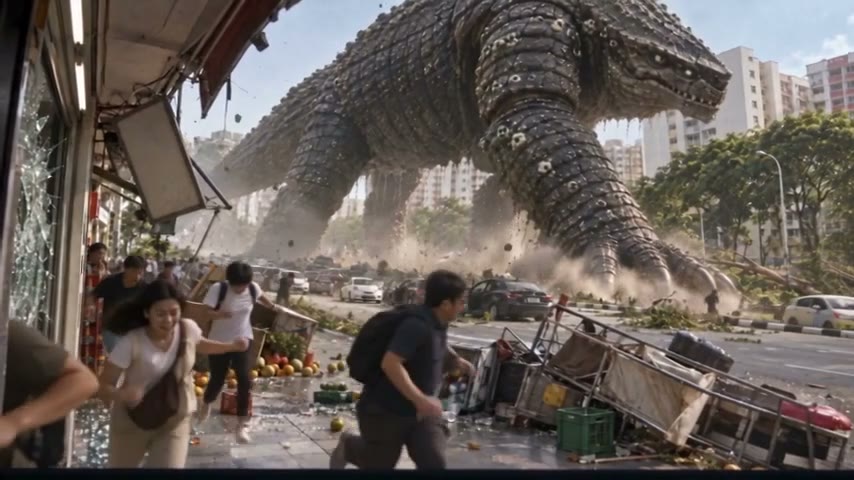
A good AI channel idea is a show you can describe in one sentence with a person in it, not a subject people search for. “Scary stories” or “AI facts” are topics, and anyone can make the same video tomorrow. “A harbour master who is the only one who saw where the creature went” is a show, and only you can make it. It must also be makeable every week, so keep the cast and places small enough to reuse. And every episode needs a new story, not the last one repainted: YouTube doesn’t pay for AI videos that look mass-produced or templated, as of November 2026; what YouTube pays for and what it refuses has the full rules. My own example, OVERCLOCK, is a photoreal kaiju series: one man with no powers, the same lead in every episode, and a creature that keeps walking. See how an AI TV show like it is made, then pick from the ten below.
Nobody subscribes to a topic. They subscribe to find out what happens next.
Low Tide
A creature surfaces off a fishing town in Kerala, and only the harbour master saw where it went. Each episode it comes a little closer to shore; 6 to 8 minutes.
“Start a photoreal monster series called Low Tide: a creature surfaces off a Kerala fishing town and only the harbour master saw where it went. Wide, 6 to 8 minutes an episode.”
Floor 9
Five coworkers, one open-plan office in Bengaluru, and a printer that has never once worked. Every episode is one small office war with a clean ending; 3 to 5 minutes.
“Start an office comedy series called Floor 9 about five coworkers at a Bengaluru startup and a printer that never works. One small office war per episode, 3 to 5 minutes.”
Sunday Lunch
Three grown siblings eat at their mother’s house every Sunday, and every lunch one secret comes out. One table, a lot of dialogue; 6 to 10 minutes.
“Start a family drama series called Sunday Lunch: three grown siblings eat at their mother’s house every Sunday, and each episode one secret comes out. 6 to 10 minutes an episode.”
Lost and Found
A clerk at a busy railway lost-property office finds that every unclaimed bag holds a clue to the same missing person. One clue per episode; 5 to 7 minutes.
“Start a mystery series called Lost and Found: a clerk at a busy railway lost-property office finds every unclaimed bag holds a clue to the same missing person. One clue an episode, 5 to 7 minutes.”
Next Tuesday
Each episode, a different ordinary person meets one piece of the future that arrived early, like a fridge that argues back. Stand-alone, so any episode is a good first one; 3 to 5 minutes.
“Start a sci-fi anthology called Next Tuesday: each episode, a new ordinary person meets one piece of the future that arrived early. Stand-alone episodes, 3 to 5 minutes.”
The Lantern Fox
A hand-drawn cartoon for younger viewers: a kind fox helps a different neighbour with a small problem each week, and nobody is ever in danger. The stakes are a lost kite or a burnt cake; 3 to 4 minutes.
“Start a hand-drawn cartoon series called The Lantern Fox: a kind fox helps a different forest neighbour with a small problem each episode and ends on a gentle lesson. Calm, nobody in danger, 3 to 4 minutes.”
Ghar Ka Wi-Fi
A joint family in Indore shares one Wi-Fi password, and every episode someone changes it. Everyday Hindi mixed with English, English subtitles; 4 to 6 minutes.
“Start a Hindi family comedy series called Ghar Ka Wi-Fi: a joint family in Indore fights over one Wi-Fi password. Everyday Hindi with English, English subtitles, 4 to 6 minutes an episode.”
Tomorrow’s Telegram
Bombay, 1923: a telegraph clerk starts receiving messages a day before they are sent, and each episode he tries to change one small thing. Period streets and clothes; 6 to 8 minutes.
“Start a period what-if series called Tomorrow’s Telegram: in 1923 Bombay, a telegraph clerk receives messages a day before they are sent and tries to change one small thing each episode. Photoreal, 6 to 8 minutes.”
Last Train Out
Short horror on night trains: each episode follows a different adult passenger and ends on one image you can’t shake. Quiet and slow; 2 to 3 minutes.
“Start a horror anthology called Last Train Out: each episode follows a different adult passenger on a night train and ends on one image you can’t shake. 2 to 3 minutes, slow and quiet.”
Two Floors Apart
A phone-first romance about two neighbours who only ever meet in their building’s lift. One lift ride per episode, each ending on a cliffhanger; 1 to 2 minutes, tall.
“Start a tall mini drama series called Two Floors Apart: two neighbours who only meet in their building’s lift, one ride per episode, each ending on a cliffhanger. 1 to 2 minutes, tall.”
Which AI channel ideas are easiest to start with?
Anthologies and small-cast comedies are the easiest, because each episode is short and stands on its own. In an anthology like Last Train Out or Next Tuesday, a new viewer can start anywhere, and a weaker episode never breaks a running story. In a one-room comedy like Floor 9, the same office and the same five faces carry every episode, so most of each week is reuse. Keep the first episodes between two and five minutes. If you are not sure an idea has legs, make it as one short film first and see whether you want a second. Comedy is also the quickest to test: AI memes are a fast way to find out what makes a character funny before you build a show around them. The far end of the scale is OVERCLOCK Episode 5: 10 minutes 7 seconds, 26 clips and 39 named characters. Work up to it.
Can a faceless AI channel still have a face?
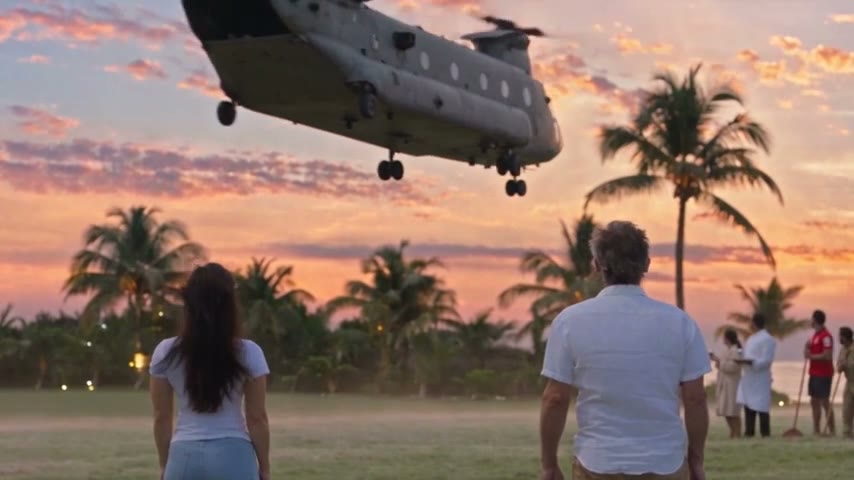
Yes, and it should: you never appear, but your characters are the faces people come back for. Many faceless channels are a voice over stock pictures, with nobody in them to care about. A series gives the channel a cast instead. In Agent Social, each character is made once as a picture and reused in every shot, and each keeps one voice, so the same face and the same voice turn up week after week; that is what consistent characters means in practice. You can also star without filming anything, because a photo of yourself can become a character, which is how I play Deep in OVERCLOCK. If your idea is closer to a narrated tale, story videos with real scenes show how to keep it from turning into a slideshow. In Episode 4, Deep leaves for the fight and Nora and Otto stay behind on the lawn to watch the helicopter go: the same faces viewers met episodes earlier.
Can you make an animated or anime AI channel?
Yes, and animation opens shows a camera never could: a robot butler who takes every order literally, or a tea-estate manager learning to pilot a giant harvester through the monsoon. In Agent Social, ask for a cartoon or anime style when you start the series and it is saved with the series, so every episode keeps the same look and the same characters. Name the style in plain words: a hand-drawn Saturday-morning cartoon, a soft 3D family-film look, a 90s anime look. Animation suits gentle shows for younger viewers, like The Lantern Fox above, and comedy, where bigger expressions help a joke land. The AI cartoon series maker and the AI anime series maker show what each covers, and the guide to making an AI cartoon series walks through keeping a style. To be honest: OVERCLOCK is photoreal, and there is no animated example on the site yet. Films come out photoreal unless you ask otherwise.
Exactly As Told
A household robot bought in a sale takes every instruction literally, in a crowded Jaipur flat. “Clean the whole house” goes about how you would expect; 3 to 5 minutes.
“Start a soft 3D comedy series called Exactly As Told: a household robot bought in a sale takes every instruction literally in a busy Jaipur flat. Keep the look for every episode, 3 to 5 minutes.”
Iron Monsoon
A Darjeeling tea-estate manager learns to pilot the estate’s rusting giant harvester robot, one storm at a time. Big skies, bigger machines; 5 to 7 minutes.
“Start an anime series called Iron Monsoon in a 90s anime look: a Darjeeling tea-estate manager learns to pilot the estate’s rusting giant harvester robot, one storm per episode. 5 to 7 minutes.”
Can you make a Hindi AI YouTube channel?
Yes, and Hindi comedy may be the easiest show of all to start, because a family, a housing society or an auto rickshaw already comes with a cast and an argument. Ghar Ka Wi-Fi is in the list above, and two more are below: an auto driver who fixes every passenger’s problem by accident, and a society secretary with one new rule per episode. Tell the studio the series is in Hindi before it writes anything, and every episode comes out in everyday Hindi mixed with English, the way people actually talk, with Indian accents and English subtitles on the finished film. English is the default, so that one line changes the whole series, and the subtitles let the same episode reach viewers who don’t speak Hindi. The Hindi AI web series guide covers the switch, and Hindi AI movies shows what the studio does in Hindi. You can also clone your own voice from a recording of 15 seconds or more and give it to your lead.
Meter Down
A Bhopal auto driver gives every passenger advice nobody asked for, and somehow fixes their problem by accident. One ride, one stranger per episode; 3 to 5 minutes.
“Start a Hindi comedy series called Meter Down: a Bhopal auto driver solves each passenger’s problem by accident. One ride per episode, everyday Hindi with English, English subtitles, 3 to 5 minutes.”
Society Meeting
The new secretary of a Thane housing society tries to bring in one new rule per episode, and every resident has an opinion. 4 to 6 minutes.
“Start a Hindi comedy series called Society Meeting: the new secretary of a Thane housing society brings in one new rule per episode and every resident fights it. English subtitles, 4 to 6 minutes.”
How do you pick the right AI channel idea?
Pick the idea you would watch yourself, could make every week, and can already see ten episodes of. Taste comes first, because you will spend more hours in this world than any viewer will. Then be practical. Count the main characters and places: each is made once and then reused, so a smaller cast means a faster week. Write a one-line story for each of the first three episodes. If they come easily and each ends on a reason to watch the next, you have a series; if you run dry after one, you have a film, which is fine, so make it as one. Then let length set the budget: what an AI episode costs prices a week of your show before you start, and you draft at 480p and upscale the finished film to 1080p in one click once it is final. Run your idea through the checker below.
Is this idea a series?
- Can you say it in one sentence with a person in it?
- Can you write a one-line story for the first three episodes right now?
- Does every episode share something: a cast, a place or a fixed format?
- Is each episode a different story, not the last one with new names?
- Could you make one episode every week?
Answer each question for your verdict.
How do you name an AI YouTube channel?
Give it a name that is short, easy to say out loud, not tied to “AI”, and big enough for your second show. Viewers come for the stories, not the tool, and a name built around AI says nothing about what they will watch. Say it once to a friend: if they could type it after hearing it, it passes. Then search it on YouTube before you fall for it, because a name already in use, or one letter away from a bigger channel, sends your viewers somewhere else; check the handle is free too, and use the same name everywhere you post. Think twice before naming the channel after your first series, unless you plan to stay with that one show for years. Mine is simply my name, Deep Bhalerao, and its description promises movies, series, sci-fi and monster attacks, not “made with AI”; OVERCLOCK is the show on it today.
What are some good AI YouTube channel name ideas?
Good AI YouTube channel name ideas come from six patterns, and the right one depends on what the channel will hold. Your own name fits every show you will ever make. A studio name, like Paper Kite Pictures, sounds like a place that makes films and can hold several series under one roof. A world or a place, like Monsoon Coast Tales, suits shows that share one setting. A promise to the viewer, like Two-Minute Endings, tells an anthology’s audience exactly what they get. The first show’s name, like Low Tide, is strongest when you will stay with one show for years. And a Hindi-English phrase, like Thoda Scene Hai, says Hindi or Hinglish before anyone presses play. Every name in the table is invented for this page, so search each one on YouTube before you use it, and treat them as a starting point: swap a word, keep the pattern.
| Pattern | Examples | Best for |
|---|---|---|
| Your own name | Yours (mine is Deep Bhalerao) | Every show you make, now and later |
| A studio name | Paper Kite Pictures · Brass Lantern Studio · Third Chai Productions | Several series under one roof |
| A world or a place | Monsoon Coast Tales · Saltpan Stories · Upper Deck Town | Shows that share one setting |
| A promise to the viewer | Tiny Twist Theatre · Two-Minute Endings · One More Episode | Anthologies with a fixed format |
| The first show’s name | Low Tide · Floor 9 · Ghar Ka Wi-Fi | One show you will stay with for years |
| A Hindi-English phrase | Thoda Scene Hai · Kahaani Mode | Hindi or Hinglish shows |