
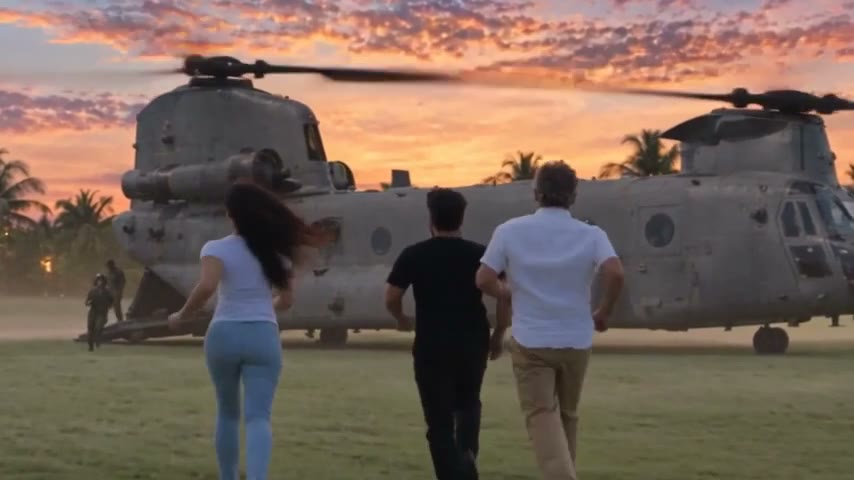
You become an AI filmmaker by finishing films. An AI filmmaker is a director who writes, casts and directs in words, then judges every shot that comes back. Make one short, then a three-episode series with one cast, then a channel. I made all five episodes of OVERCLOCK, my photoreal kaiju series, alone, with no camera and no crew.
What does an AI filmmaker actually do?
An AI filmmaker does the director’s job without a camera: they decide the story, cast the characters, describe the places, direct each scene in words and judge every shot that comes back. The AI makes the pictures; the filmmaker makes every choice that turns pictures into a film. It is four old jobs in one chair. You are the writer who knows what each scene is for, the casting director who picks a face and keeps it, the director who says who stands where and what we hear, and the editor who decides what stays. In Agent Social, the studio writes, casts and films while you approve every step, which is how an AI movie maker should work. It is exactly how I made OVERCLOCK: one approval at a time.
What skills do you need to become an AI filmmaker?
You need five skills, and none of them is a tool: story, directing a scene, continuity, pacing and sound. Story is a character who wants something, a problem in the way and a turn nobody saw coming. Directing a scene is saying who is where, what they do and what we hear. Continuity is the same face, clothes and room from shot to shot. Pacing is knowing how long a moment should hold. Sound is lines that fit the speaker, and a scene you can hear. Tools change every few months; these five do not, and each has a drill you can do in one evening, below. Learn to write a screenplay the model films well and to keep the same face in every shot first: those two show the moment they are missing.
| Skill | The drill |
|---|---|
| Story | Write your film in three sentences: who wants what, what stands in the way, what turns at the end. If it needs a fourth, it is two films. |
| Directing a scene | Block one scene in words: where each person stands, what they do, what we hear. Film it and compare. |
| Continuity | Put one character in three places, a kitchen, a street at night and a moving car, and check the face and clothes hold. |
| Pacing | Watch a clip with the sound off. Where your eyes drift, the moment holds too long; where you miss what happened, it is too short. |
| Sound | Close your eyes and play a scene. If you cannot tell who is speaking, two voices are too alike. |
How do you learn AI filmmaking fast?
You learn AI filmmaking fastest by finishing three things in order: one short film, then a three-episode series with the same cast, then a channel with an episode on a set day. Each step adds a hard skill. A short teaches story and scene directing, because a minute has no room for padding. A series teaches continuity, because the same faces have to come back next week. A channel teaches pacing and finishing, because a trailer, an episode and a Short each need a different cut. The first step is one line of story, which the studio turns into a short film you read, check and film in order. Start with the AI short film maker and keep your first film under two minutes.
Make one short film
Project 1One or two minutes, one place, two characters, one turn. Watch every clip before the next is filmed, then add music and subtitles.
Make a three-episode series
Projects 2 to 4The same cast and world, with a story that carries on. Follow how to make an AI TV series, step by step, and start each episode where the last one ended.
Cut a trailer
After the seriesA few whole moments from the finished film, in the order they happen. How to make an AI movie trailer walks through a real one.
Start a channel
Every week afterPick one set day a week and keep it. How to make AI videos for YouTube covers the launch.
Why do so many people who try AI filmmaking never finish a film?
Many never finish because they make clips, not films. A clip is one striking moment. A film needs the same person in the next shot, a room that stays the same room, and a story that turns. When every shot comes from a different app with a fresh prompt, faces drift, places change and nothing connects. It can cost you money, too. YouTube doesn’t pay for AI videos that look mass-produced or templated, as of November 2026; what YouTube pays for and what it refuses has the full rules. Finishing comes from holding one story, one cast and one world in one place, and that is what the studio holds for you: the cast is made once and reused in every shot, and clips are filmed in story order, each carrying on from the last. That is what keeps characters consistent across a whole series.
Collecting tools and one-off clips
- A new app every week, a new prompt every shot
- Faces and rooms change from clip to clip
- Great moments with no story between them
- A folder of clips and nothing to post
Finishing whole films with one cast
- One studio holds the story, cast and places
- The same faces in every shot and every episode
- Scenes filmed in order, each carrying on from the last
- A finished film to post, and the next episode planned
Nobody remembers which tool made a film. They remember the film you finished.
What should your first AI film be?
Your first AI film should be a one- to two-minute short with one place, two characters, one problem and one turn at the end. It is small enough to finish in a sitting or two, and big enough to test all five skills. Play the lead yourself if you like: a few of your own photos become a character, and you can clone your voice from a recording of 15 seconds or more. Type one line of story, read the chapters, check the two cast pictures, film in order, then ask for music and subtitles. To price it before you start, see what an AI episode costs. Planning your evenings? A five-minute film can be done in two to three hours; here is how long an AI movie takes.
The last customer
One café, two people, one secret. Small enough to finish this week, and every line has to earn its place.
“Make a two-minute short: a café owner tells her last regular she is closing tonight, and he finally tells her why he came every single day.”
You, in your own film
Your own face is the hardest continuity test there is: you will notice the moment it drifts.
“Make a one-minute short starring me from my photos: I try to return a wrong food delivery and walk into a stranger’s surprise party.”
Something under the boat
A monster story told through one witness: big stakes, one place, one face to keep the same.
“Make a photoreal two-minute short: an old fisherman at dawn feels something enormous pass under his boat, and nobody at the harbour believes him.”
The missing rings
A family comedy in everyday Hindi with English subtitles, built on one panic and one fix.
“Make a two-minute Hindi comedy with English subtitles: the night before the wedding, the groom’s father realises the rings are still in the taxi.”
Episode 1 of your show
A team, a deadline and one ground to save: a story with room for three episodes and the same cast in each.
“Start a three-episode series about a small-town women’s cricket team with one season to win back their ground from a car park. Show me the chapters before filming.”
Is an AI filmmaking course worth it?
An AI filmmaking course is worth it only if you finish a film of your own by the end of it. Many courses teach one app’s buttons, and those lessons age as fast as the app does. A good course teaches the five skills, gives you notes on your own work, and is taught by someone who can show whole films they finished, not a reel of clips. We do not sell a course, and you do not need one to start: the guides on the Agent Social Learn page are written from making a real series, and your first finished short will teach you more than a week of lessons. Run any course through the check below first.
Is this AI filmmaking course worth your money?
- Will you finish a whole film of your own by the end?
- Does it teach story, scenes, continuity, pacing and sound, rather than one app’s buttons?
- Can the teacher show whole films they finished, not just a reel of clips?
- Is most of it a list of tools or a pack of prompts to copy?
- Will someone give you notes on your own work?
Answer each question for your verdict.
Can you become an AI filmmaker without a camera, a crew or film school?
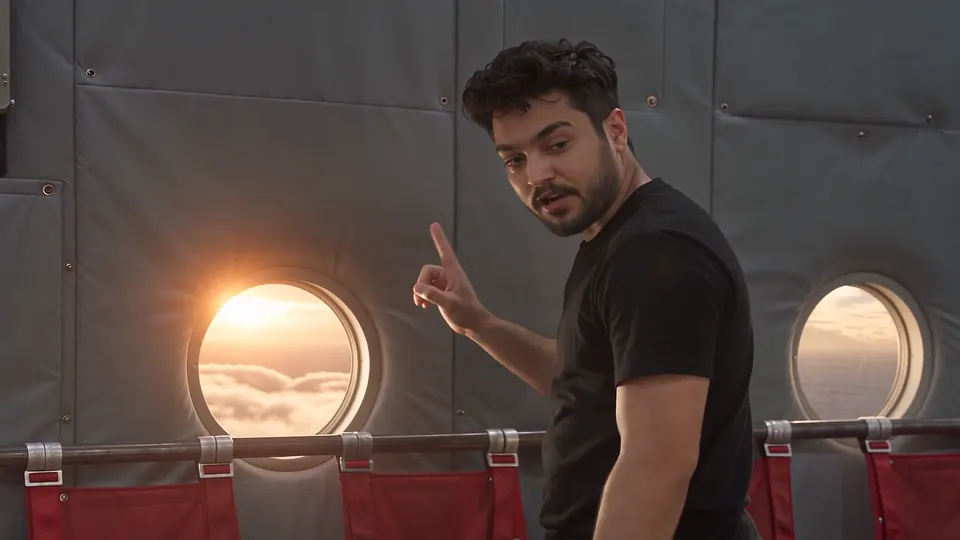
Yes. There is no camera, crew, actor or film school behind OVERCLOCK: I play Deep, the lead, from my own photos. I directed the whole of Episode 1 from Claude Code through the Agent Social connector, and you can make a film from the AI app you already use the same way. Episode 5, Under the Hall, runs a little over ten minutes, with 26 clips and 39 named characters, and one person directed all of it. What replaced the crew was not a trick but the job itself: read every screenplay, check every picture, watch every clip and ask again for the ones that are wrong. That is why I built Agent Social: so anyone with a story can make the film they have always wanted to see.
5
OVERCLOCK episodes, made by one person
0
cameras, crew or actors
1
episode directed from Claude Code, through the connector
39
named characters in Episode 5
How do you get work as an AI filmmaker?
You get work as an AI filmmaker by showing finished films and explaining the choices behind them. The paid work is what clients have always commissioned: ads, music videos, pilot episodes for a show someone wants to sell, and pitch trailers that let a producer see a film before it is funded. A client wants proof you can deliver a whole story with faces that hold, not proof you know the newest tool. So send two things: one finished film, and a page showing how it was made, the way the making of OVERCLOCK Episode 3 walks from words to footage. Before you sell or license anything, read what you can and cannot copyright in an AI film. Every film you make downloads as an MP4 you can send anywhere, and every OVERCLOCK episode is a public example of the finished work a client wants to see.